

Specialized Bacteria Strains
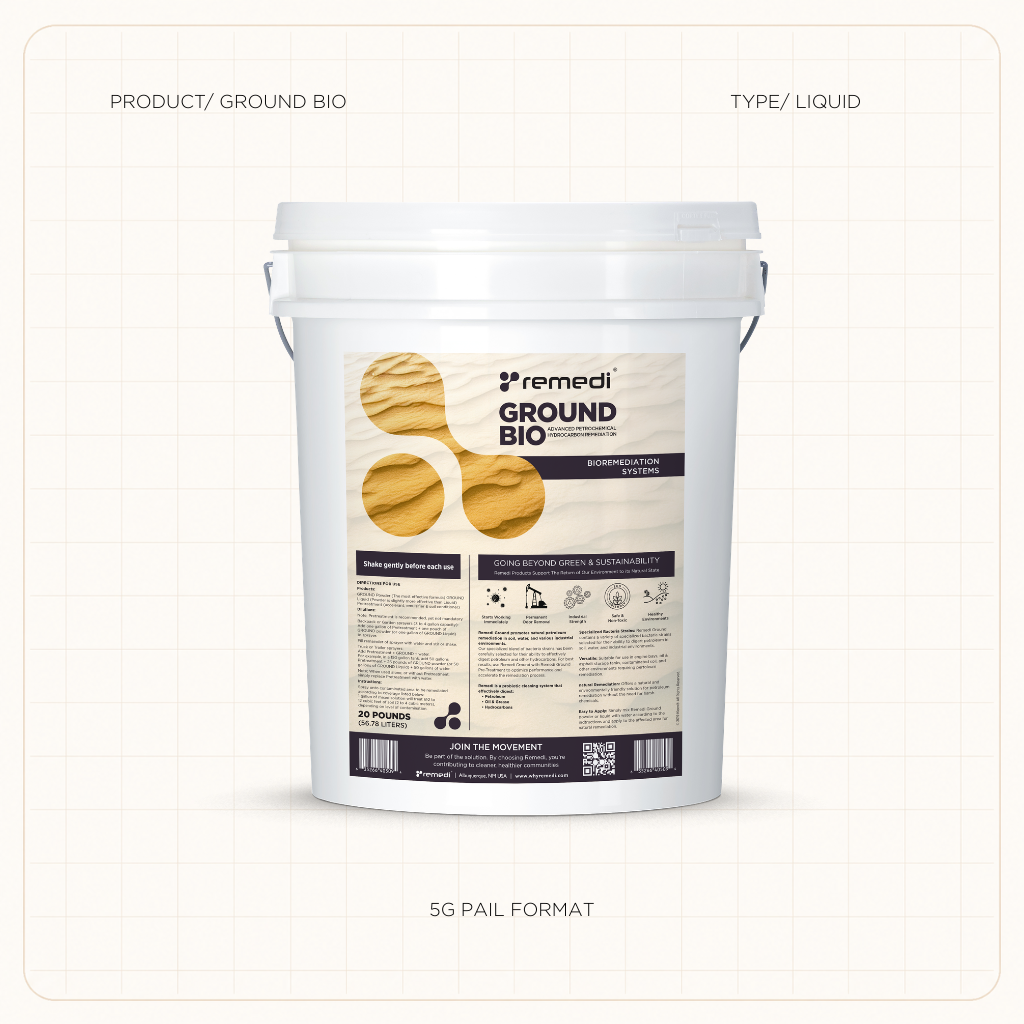
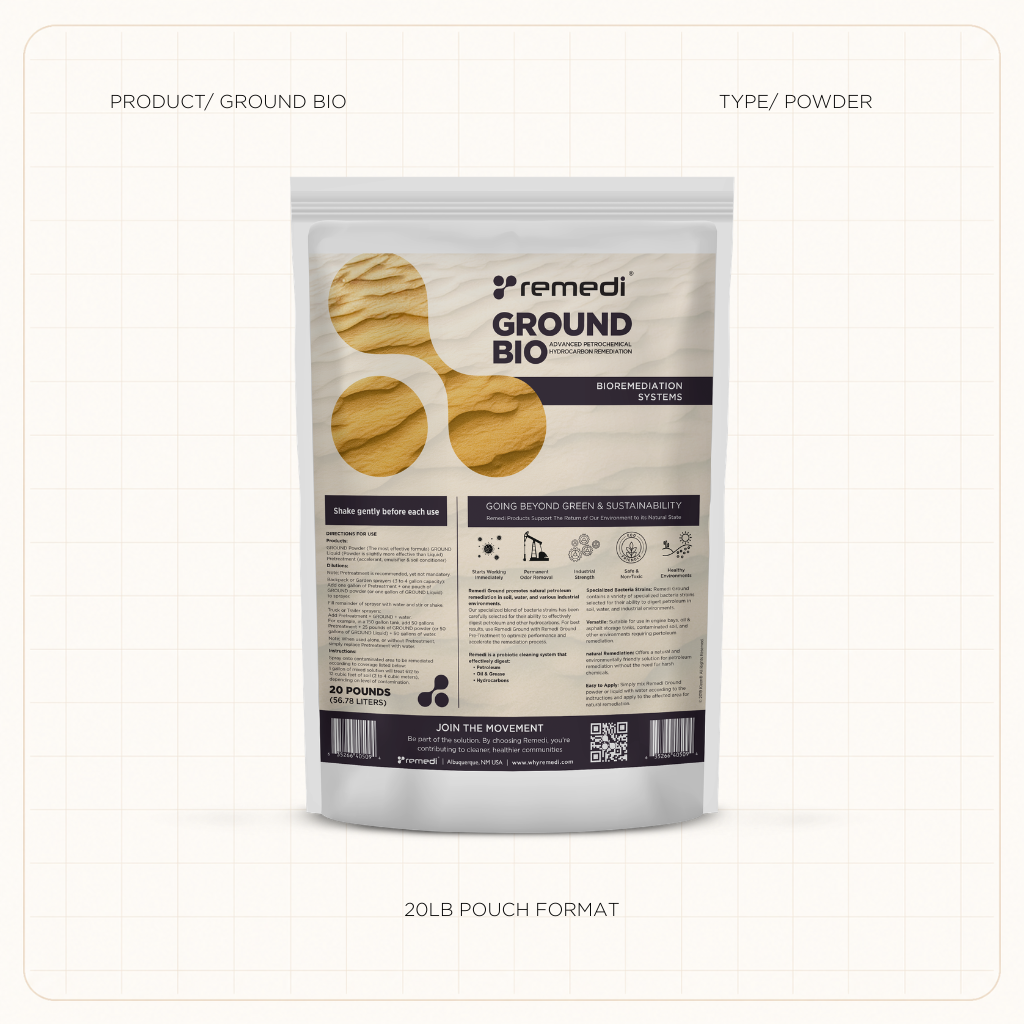
Remedi Ground contains a variety of specialized bacteria strains selected for their ability to digest petroleum in soil, water, and industrial environments.

Pairs well with
In stock! Ships within 1-2 business days.
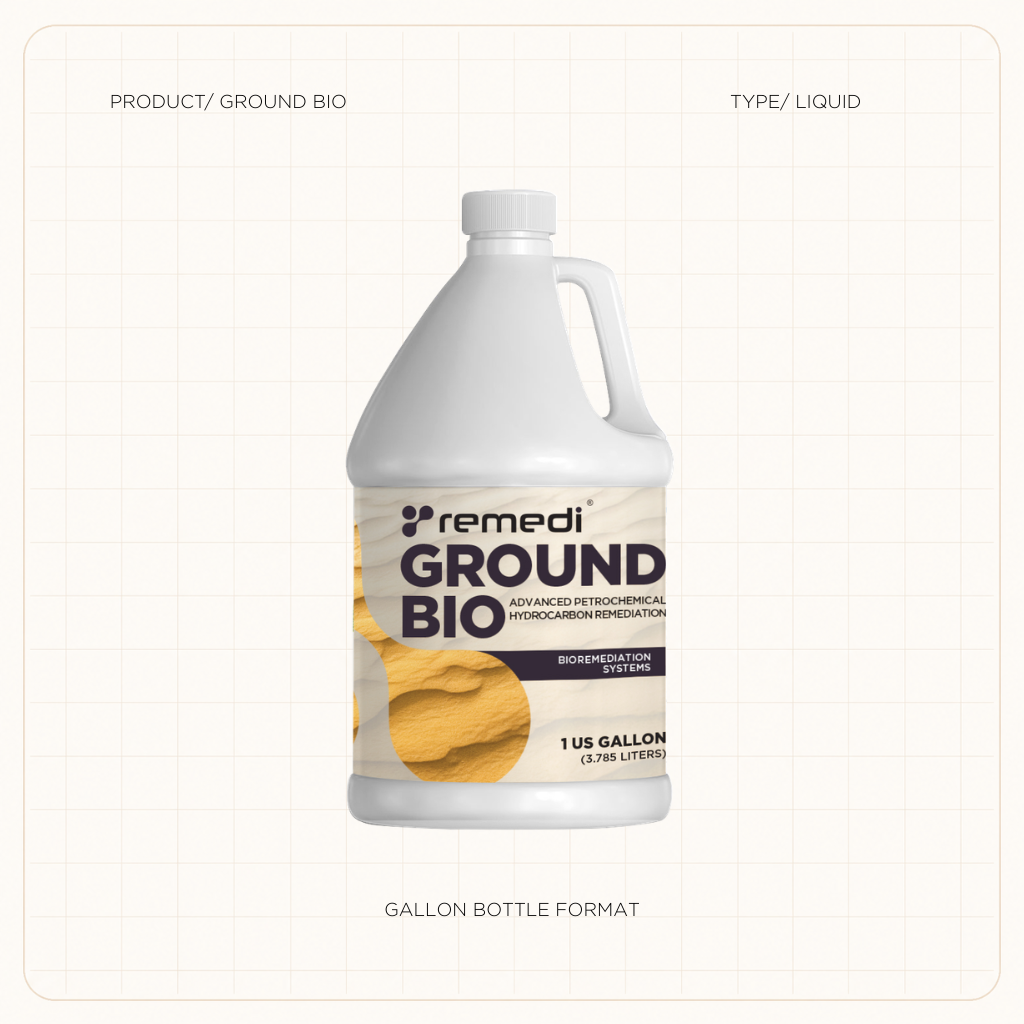
Ground Liquid
If you have any questions, you are always welcome to contact us. We'll get back to you as soon as possible, within 24 hours on weekdays.
Shipping Information
Use this text to answer questions in as much detail as possible for your customers.
Customer Support
Use this text to answer questions in as much detail as possible for your customers.
FAQ’s
Use this text to answer questions in as much detail as possible for your customers.
Contact Us
Use this text to answer questions in as much detail as possible for your customers.
Bioremediation Systems
Supporting the return of the environment to its natural state.
Remedi is a probiotic cleaning system that effectively digest:
Remedi Ground contains a variety of specialized bacteria strains selected for their ability to digest petroleum in soil, water, and industrial environments.
Suitable for use in engine bays, oil & asphalt storage tanks, contaminated soil, and other environments requiring petroleum remediation.
Offers a natural and environmentally friendly solution for petroleum remediation without the need for harsh chemicals.
Simply mix Remedi Ground powder or liquid with water according to the instructions and apply to the affected area for natural remediation.
Please read our FAQs page to find out more.
Remedi GROUND Liquid is a liquid biological treatment designed to support biodegradation of petroleum hydrocarbons
in soil, water, wastewater, and compatible industrial environments. It contains a bacterial consortium that includes
Bacillus-based organisms and Pseudomonas selected for hydrocarbon-focused applications.
It is intended for professional, site-specific remediation and wastewater-treatment programs.
GROUND Liquid is designed to support biological treatment of organic contamination associated with:
Treatment suitability depends on laboratory characterization, contaminant concentration, site conditions, treatment
design, and applicable regulatory requirements.
Potential applications include:
The biological consortium is designed to use biodegradable hydrocarbons and organic compounds as nutrients.
Microbial enzymes help make complex organic material more available for degradation, supporting conversion into biomass, carbon dioxide, and water under suitable conditions.
Follow the current product label, Safety Data Sheet, and site-specific remediation plan. The liquid may be applied directly to impacted soil, water, or compatible industrial surfaces using appropriate spray or application equipment.
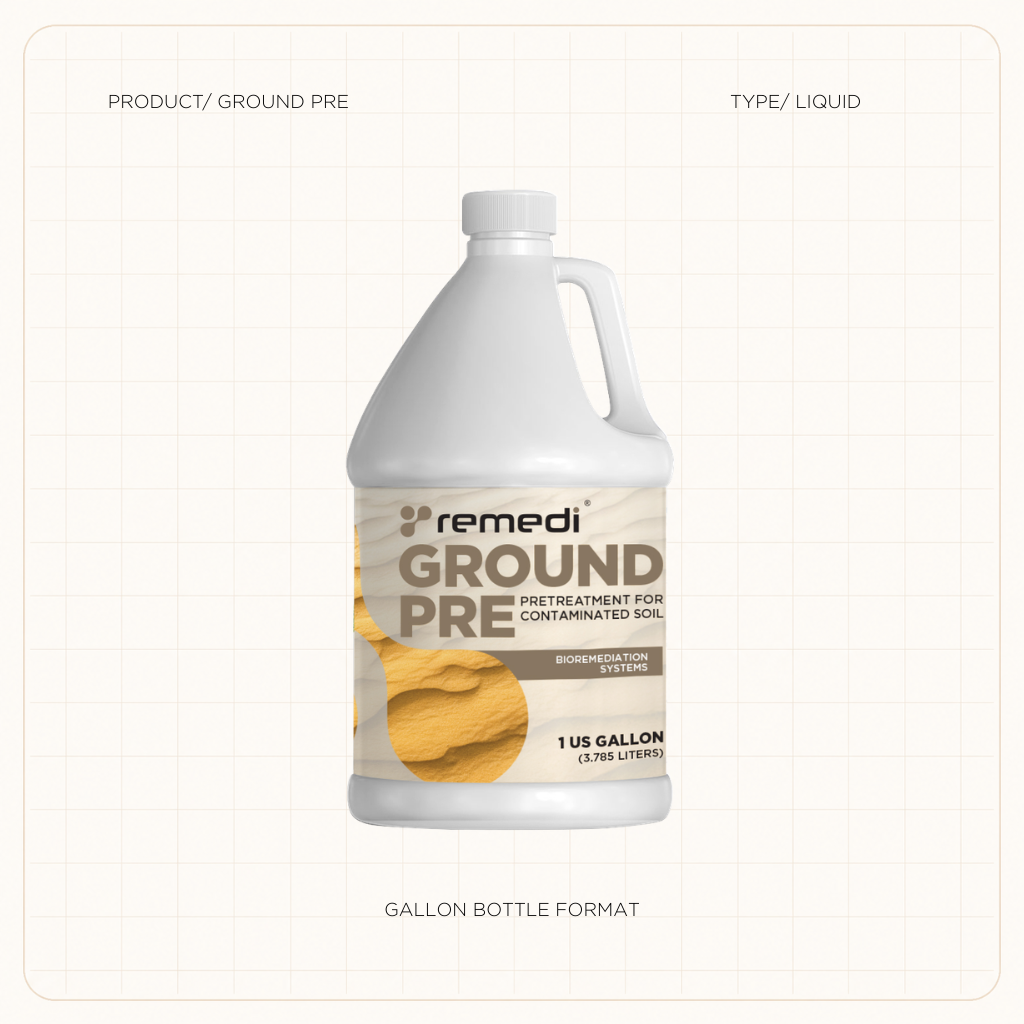
A pretreatment may be used when specified to condition the site and support biological performance. Whether one is needed depends on the hydrocarbon type, soil or water conditions, contaminant accessibility, and the approved remediation plan.
Use only approved companion products and follow the current label and site instructions.
Possibly, but aged contamination is often more difficult to remediate. Over time, hydrocarbons may become tightly adsorbed to soil particles, trapped in pores, or converted into heavier weathered fractions that are less available to microorganisms.
A treatability study can determine whether Remedi Ground, Ground Pretreatment, soil mixing, aeration, or another technology is appropriate.
Microbial and pretreatment processes may begin after the treatment contacts compatible contamination under suitable conditions. However, “begins working” is not the same as achieving measurable remediation.
Visible changes, odor reduction, or stain reduction do not prove that petroleum concentrations have reached acceptable levels.
Biological treatment generally performs best where microorganisms have sufficient oxygen, moisture, nutrients, mixing, and a moderate pH and temperature.
Condition
Yes. It is intended for compatible municipal and industrial wastewater applications involving hydrocarbons, oil, and grease, phenols, and other biodegradable organic loads.
Bioremediation is not instant. Timing depends on hydrocarbon composition, weathering, concentration, access to the
contamination, oxygen, moisture, nutrients, pH, temperature, and the overall treatment design. Use sampling and laboratory analysis to track reduction and confirm regulatory cleanup goals. Do not rely on a
reduction in odor alone as proof of remediation.
Use only as directed on the final product label and Safety Data Sheet. Wear the specified personal protective
equipment, avoid contact with eyes and skin, and follow safe handling procedures for the product and the contaminated
material.
Petroleum-impacted soil and water may create separate health, fire, vapor, and regulatory hazards. Complete work
under the appropriate health-and-safety plan and environmental permits.